






- Home
- What's new at FocalScope
- Customer service training
How live call monitoring, whisper, and barge coaching help supervisors train agents on real customer interactions as they happen.
How do you train and coach customer service agents?
Train agents through structured onboarding, hands-on practice, supervised customer interactions, targeted coaching, and ongoing performance reviews. Call monitoring, recordings, transcripts, email review, and live coaching help supervisors identify specific skill gaps and provide targeted feedback as agents develop.
What is customer service training?
Customer service training is the process of teaching customer service agents the knowledge, skills, systems, and behaviours they need to support customers effectively.
It typically covers product knowledge, communication, problem solving, complaint handling, support processes, customer service technology, and quality standards. Training begins during onboarding, but effective customer service training continues throughout an agent’s career as products, processes, systems, and customer expectations change.
The goal is not simply to teach agents how to use a support system. It is to give them the knowledge and judgement they need to understand customer needs, resolve problems, communicate clearly, and deliver a consistent customer experience.
What should customer service training include?
A comprehensive customer service training programme should cover the areas that directly affect an agent’s ability to resolve customer enquiries and provide a high quality experience.
These include:
- Product and service knowledge, including features, common questions, troubleshooting, and internal resources
- Customer communication, including tone, empathy, active listening, and clear explanations
- Support processes, including ticket handling, escalation procedures, workflows, and service standards
- Problem solving, including identifying root causes, troubleshooting, and selecting appropriate solutions
- Complaint handling, including de escalation and managing difficult conversations
- Customer service technology, including help desk, email, voice, and other support tools
- Quality standards, including CSAT, FCR, QA scores, and other relevant service KPIs
Training should also cover any procedures that affect customer trust, such as data handling, security, authentication, and escalation requirements.
Most importantly, training should not end when an agent completes onboarding. Ongoing coaching allows managers to reinforce good behaviours, address skill gaps, and adapt training as the business changes.
How do you train new customer service agents?
The most effective way to train new customer service agents is to combine structured learning with practical experience, supervised customer interactions, and ongoing coaching.
New agents first need to understand the product, customers, systems, and processes they will work with. They then need opportunities to practise those skills before they are expected to handle increasingly complex customer interactions independently.
Build a structured customer service onboarding programme
Customer service onboarding introduces new agents to the information and skills they need to perform their roles. A typical programme moves from foundational knowledge towards supervised practice and independent customer handling.
Agents should learn about the company and its products, customer service policies, support workflows, communication standards, escalation procedures, and the systems they will use every day.
Once the fundamentals are established, agents can begin practising common customer scenarios and handling supervised interactions. Supervisors can then use actual performance to determine where additional training is needed.
There is no universal onboarding timeline. Product complexity, the number of support channels, previous agent experience, and the level of supervision available all affect how long training should take.
Provide hands-on, on-the-job training
Practical experience allows new agents to apply what they have learned to genuine customer situations. It also gives supervisors evidence of how an agent performs when dealing with real questions, problems, and customer behaviour.
With FocalScope, supervisors can monitor live calls, review customer interactions, and provide feedback while agents develop their skills.
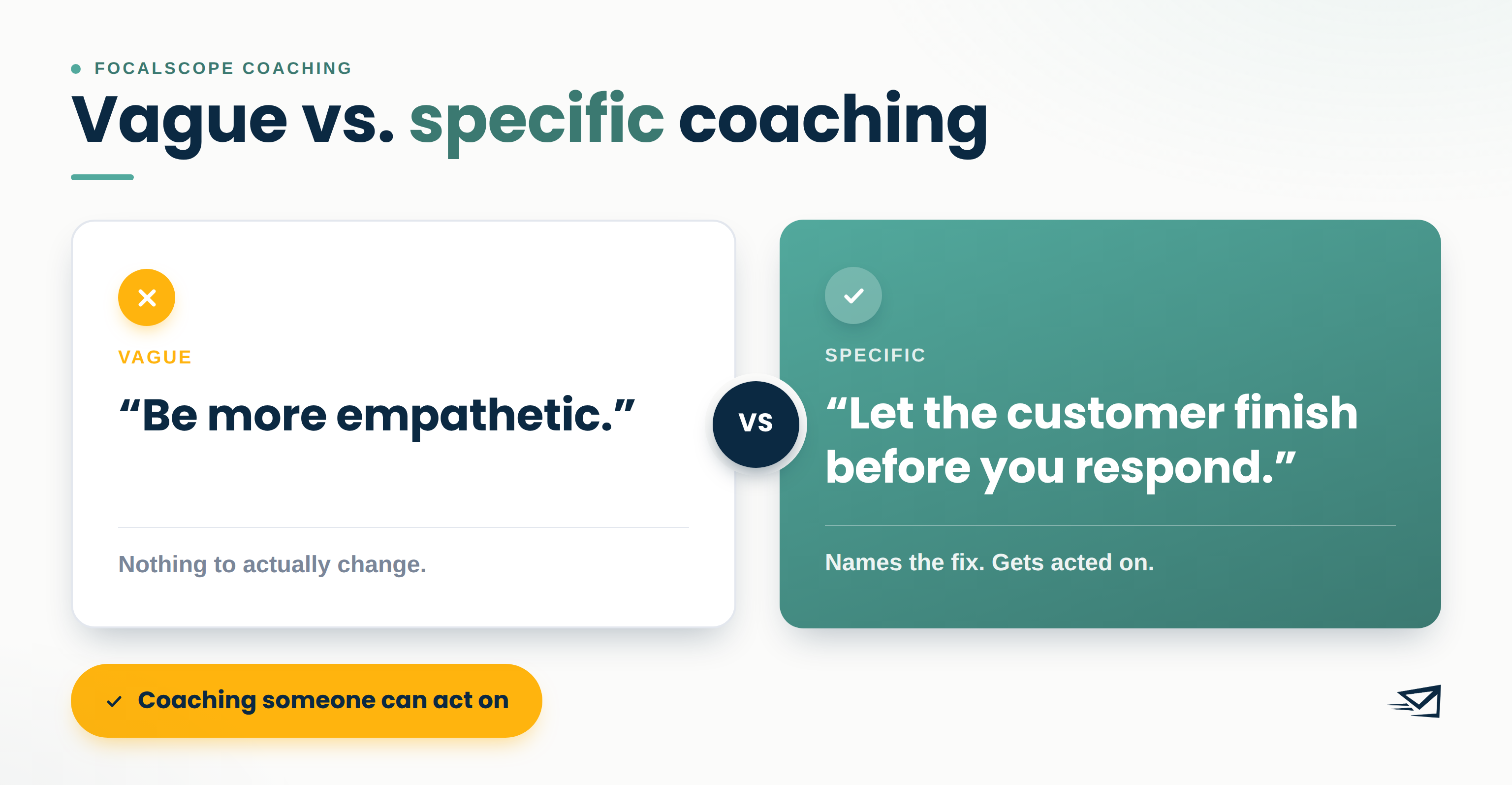
Instead of telling an agent to “improve their communication”, for example, a supervisor can identify a specific interaction, explain what happened, demonstrate a stronger approach, and then monitor subsequent interactions to see whether the behaviour changes.
This makes coaching specific, measurable, and directly relevant to the agent’s role.
Use role playing and simulated interactions
Role playing gives new agents an opportunity to practise before they begin handling customers independently.
Supervisors can simulate common enquiries, complaints, technical problems, and escalation scenarios. Agents can practise asking questions, explaining solutions, managing difficult conversations, and following support procedures without the pressure of a live customer interaction.
Simulation is particularly useful for complex or sensitive scenarios that agents may not encounter frequently enough to learn through normal onboarding alone.
Use call recordings and transcripts for training
Call recordings provide supervisors with real examples of customer interactions that can be reviewed with agents.
FocalScope records calls and uses speech-to-text AI technology to create transcripts. Supervisors can use these recordings and transcripts to identify what worked well, where an interaction could have been handled differently, and which skills an agent needs to develop. During on-boarding, telephony AI can alert supervisors to any issues happening in calls in real-time.
Strong interactions can also become reusable training resources. Difficult conversations, successful problem solving, common mistakes, and effective responses to complex enquiries can all provide useful examples for future onboarding and refresher training.
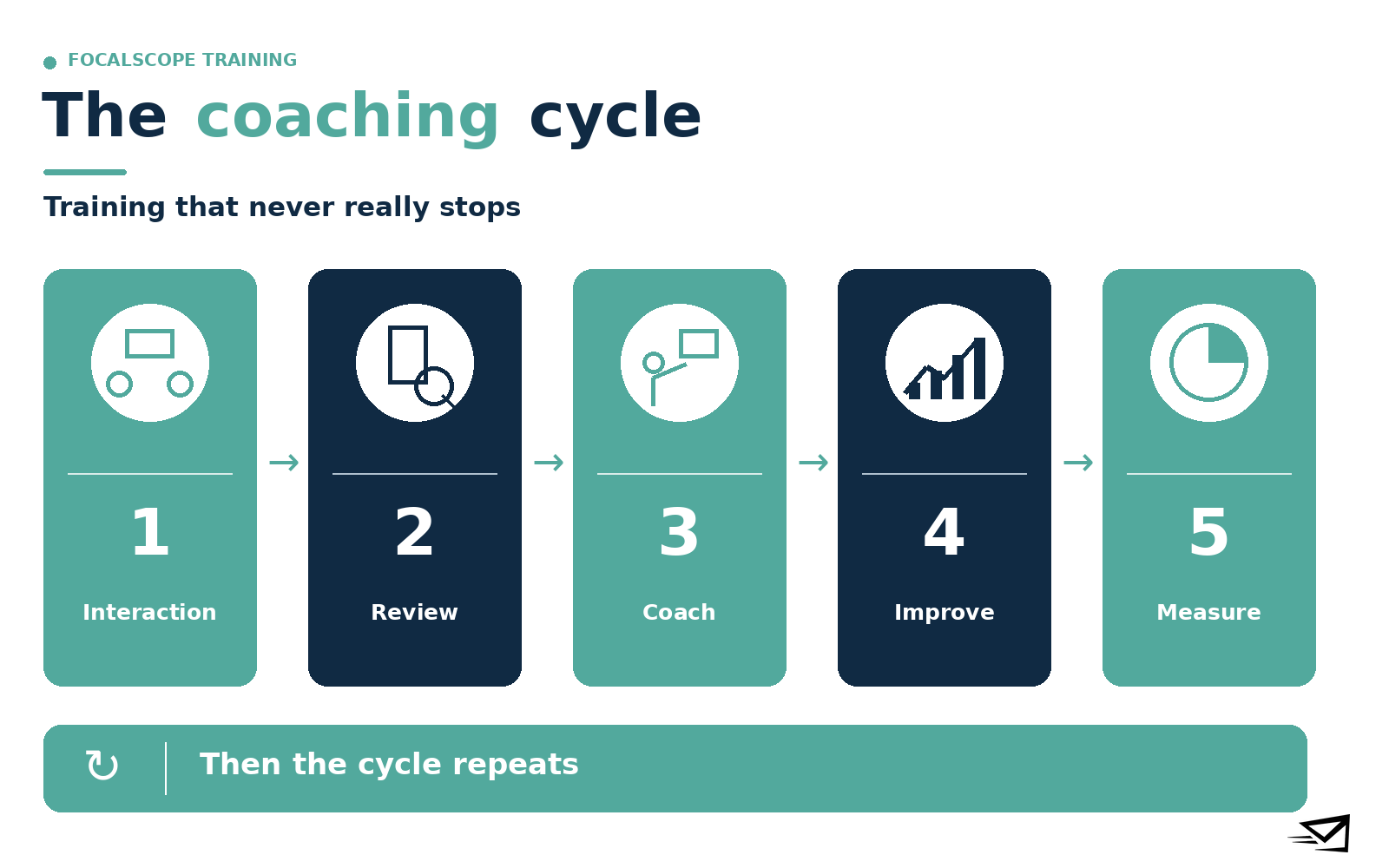
This creates a continuous coaching cycle:
This creates a continuous coaching cycle:
Customer interaction → review → coaching → improved behaviour → performance measurement.
What are the most effective customer service training methods?
The strongest customer service training programmes combine several methods rather than relying on one approach.
Common methods include instructor-led training, self-paced learning, product and systems training, role playing, shadowing experienced agents, supervised customer interactions, call review, email review, live coaching, and performance based coaching.
The right combination depends on the complexity of the product, the experience of the agents, the channels being supported, and the level of customer interaction involved.
Training should also reflect how agents actually work. If a team handles voice, email, and live chat, training should cover the differences between those channels rather than treating customer service as a single communication method.
How can supervisors coach customer service agents in real-time?
Real-time coaching gives agents access to experienced supervisors while they are handling customer interactions. This is particularly valuable during onboarding, when an agent may understand the correct process but lack the confidence or experience to apply it independently.
Review trainee emails before they are sent
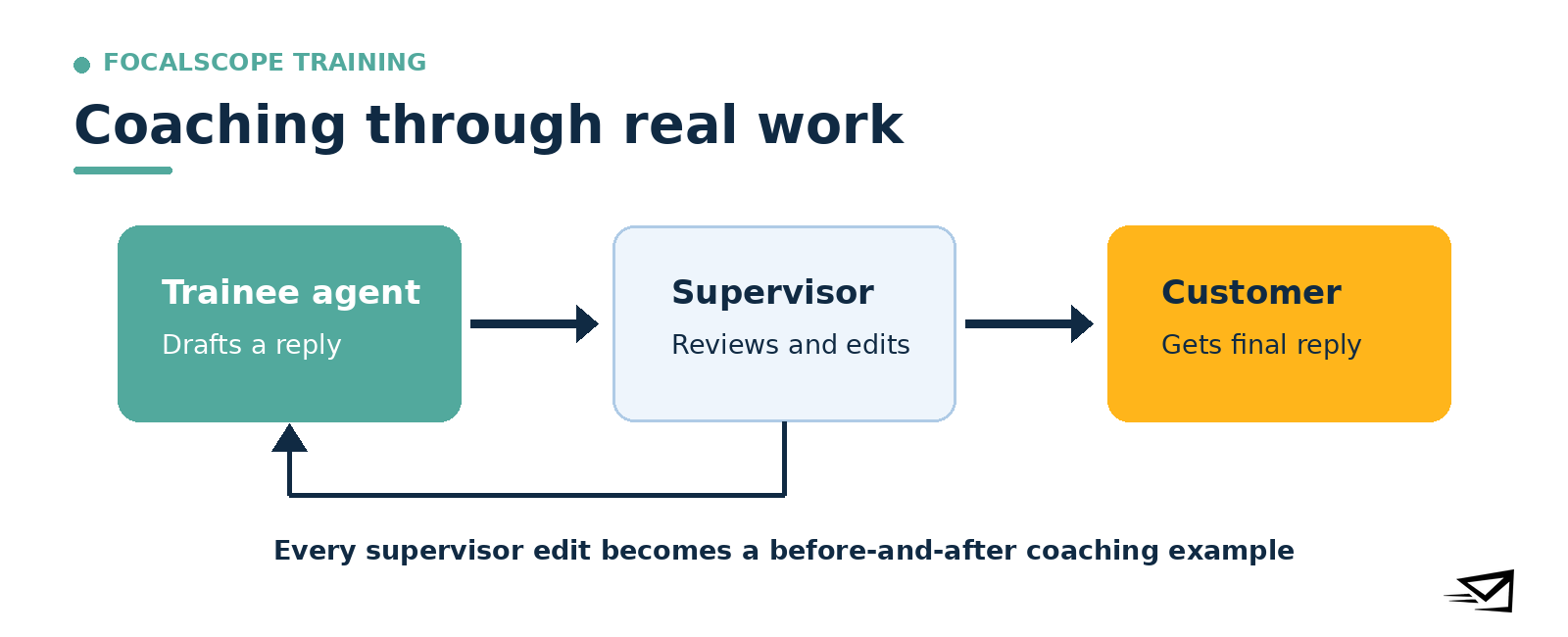
FocalScope Training Mode allows supervisors to review and edit emails handled by trainee agents before they are sent to customers.
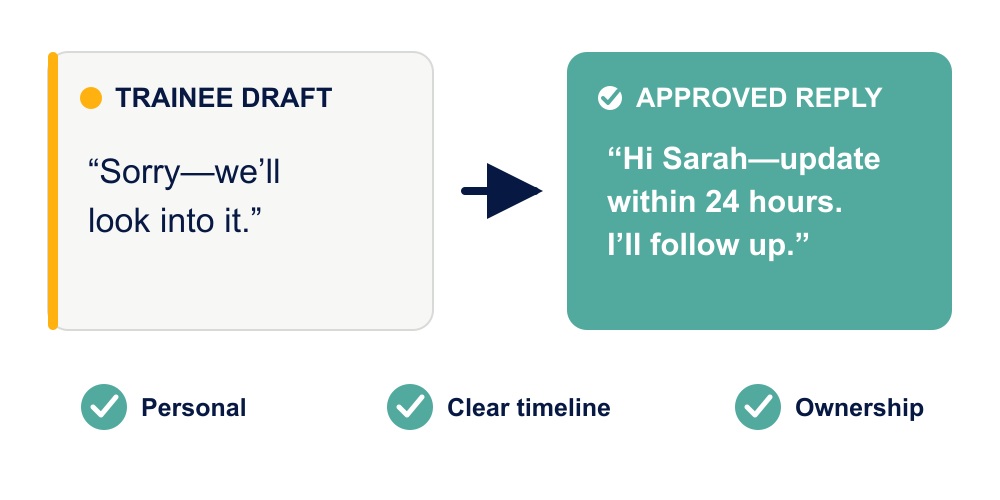
Supervisors can correct mistakes, improve wording and tone, check the accuracy of responses, and explain why a particular change is needed. Agents therefore gain practical experience while supervisors maintain appropriate quality control.
Coach agents during live calls
FocalScope AI call monitoring tools allow supervisors to listen to active calls and provide assistance when required.
Call whispering allows a supervisor to speak directly to the agent without the customer hearing the conversation. Call barging allows the supervisor to join the active call when an agent needs more direct assistance.
This can be particularly useful for complex technical questions, difficult customers, unusual requests, escalations, or situations requiring additional product knowledge.
Real time coaching protects the customer experience while allowing less experienced agents to learn in the context where the skill is actually needed.
How do you create a customer service training plan?
A customer service training plan should define what agents need to learn, how they will practise those skills, how supervisors will assess performance, and how ongoing coaching will be delivered.
| Training area | What agents learn | How performance is assessed |
| Product knowledge | Products, services, features, and common questions | Knowledge checks and interaction reviews |
| Communication | Tone, empathy, active listening, and clear explanations | Call and email reviews |
| Support processes | Ticket handling, escalation, and workflows | Process adherence |
| Systems | Help desk, CRM, voice, email, and other support tools | Supervised practice |
| Problem solving | Diagnosis, troubleshooting, and resolution | FCR and interaction reviews |
| Complaint handling | De escalation and difficult conversations | Scenario practice and call reviews |
| Quality | Service standards and KPIs | QA scores and coaching |
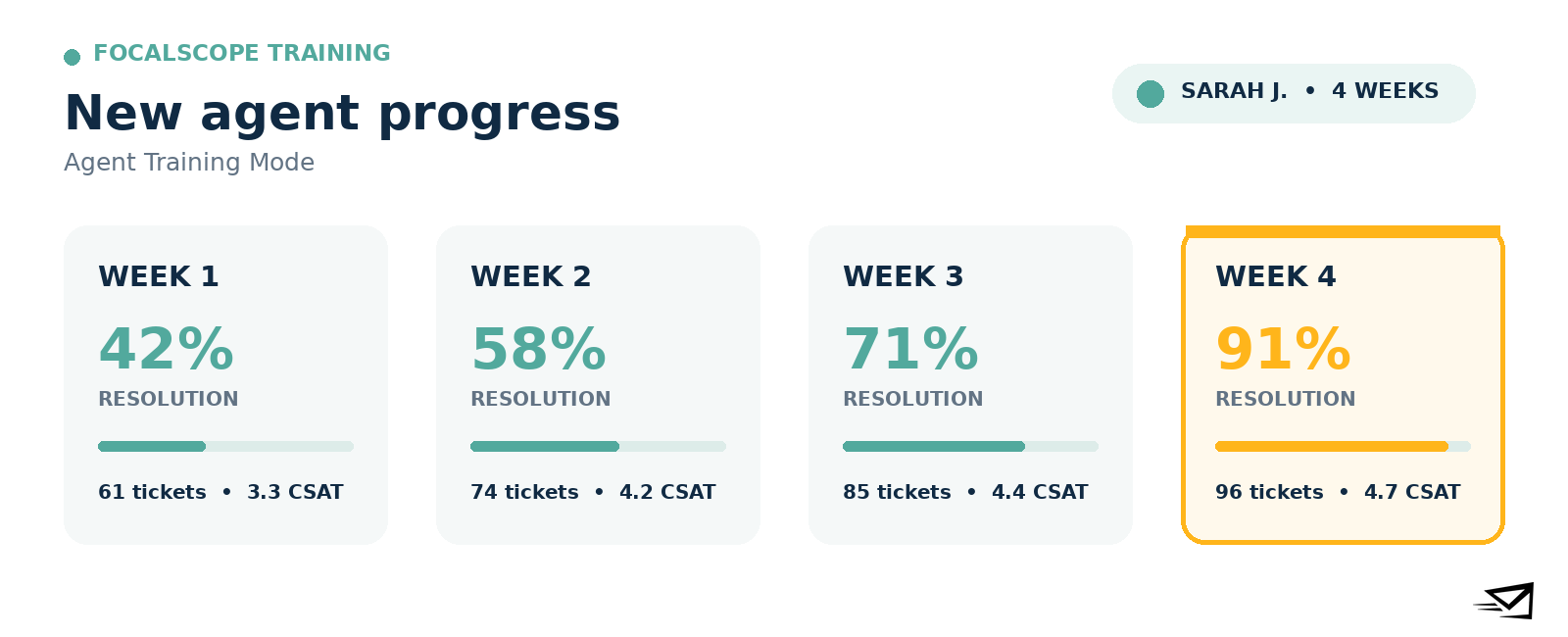
A good training plan should also define when an agent moves from supervised practice to independent customer handling. Progress should be based on demonstrated competence rather than simply completing a set number of training hours.
How do you measure customer service training performance?
Customer service training should be measured using both performance data and reviews of individual customer interactions.
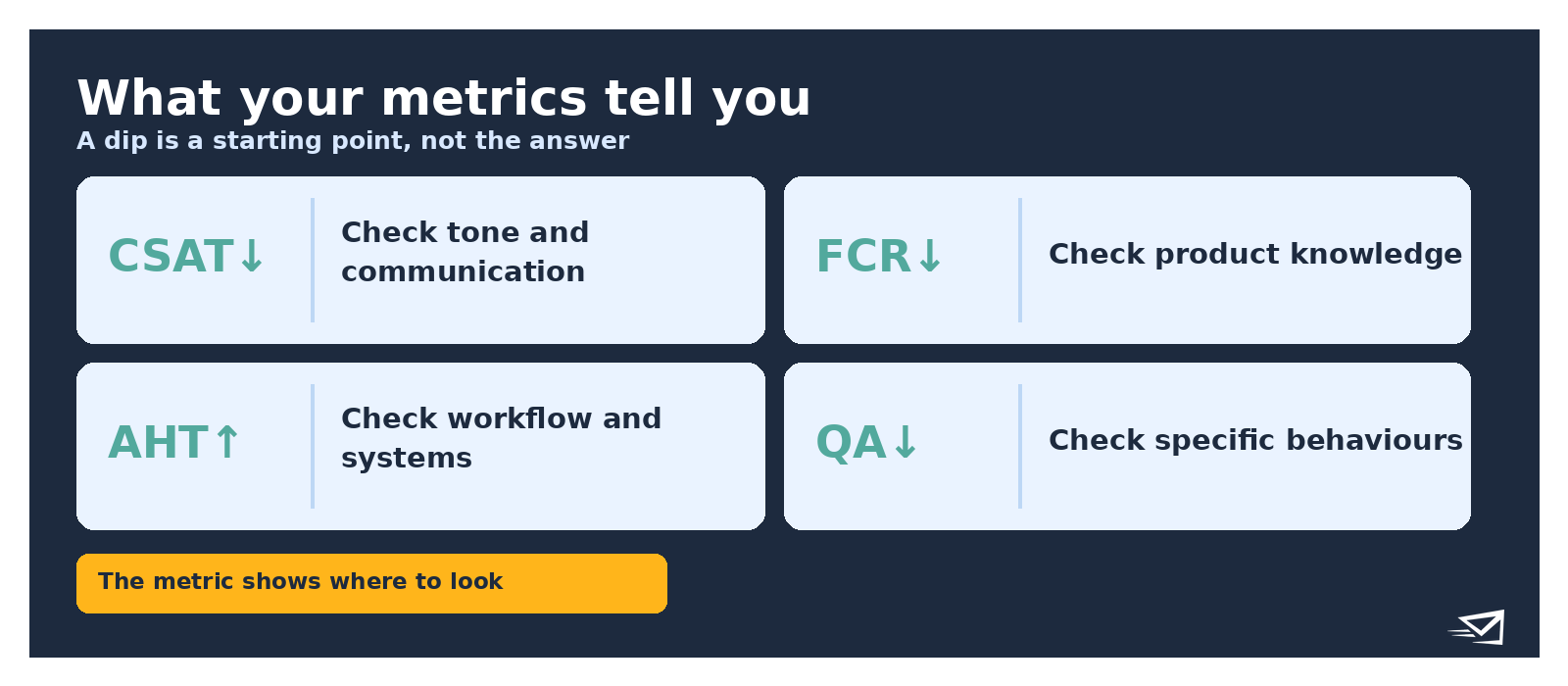
KPIs can show that an agent is struggling, but they do not always explain why. Interaction reviews provide the context supervisors need to determine whether the underlying issue is product knowledge, communication, process adherence, system navigation, workload, or another factor.
| KPI | What it measures | How it supports coaching |
| CSAT | Customer satisfaction following an interaction | Review low scoring interactions to identify communication or service issues |
| FCR | Issues resolved during the first interaction | Identify product knowledge or problem solving gaps |
| AHT | Average time spent handling an interaction | Identify workflow, process, or communication issues |
| First Response Time | Time taken to respond to a customer | Identify prioritisation and queue management issues |
| Agent productivity | Volume and efficiency of customer service activity | Identify workload, process, or training requirements |
| QA Score | Performance against defined service standards | Identify specific behaviours or processes requiring coaching |
How do you train remote customer service agents?
Remote customer service agents can be trained using cloud based tools that allow supervisors to monitor interactions, provide live coaching, review performance, and maintain consistent standards without being physically present.
Remote training can combine online product and process training with role playing, supervised interactions, call monitoring, call recording, transcription, email review, performance dashboards, and regular coaching sessions.
The same principle applies whether agents work in one office or across multiple locations: training should combine knowledge with practical experience, and performance should be reviewed continuously.
How can you improve customer service training?
The most effective way to improve customer service training is to connect training directly to the work agents perform.
Use real customer interactions to identify recurring problems. Give agents specific feedback while the interaction is still relevant. Focus coaching on observable behaviours rather than vague instructions. Use performance data to identify where additional support may be needed, then review the underlying interactions to understand the cause.
Training should also evolve as the business changes. New products, features, processes, support channels, and customer expectations can all create new training requirements.
A strong programme therefore treats training as an ongoing process rather than a one time onboarding exercise.
What makes customer service training effective?
Effective customer service training is practical, continuous, and based on real performance.
Agents need to understand what they are expected to do, practise those skills, receive specific feedback, and have opportunities to apply what they have learned. Supervisors need visibility into actual customer interactions so they can distinguish between a knowledge gap, a process problem, and a behaviour that needs coaching.
The strongest programmes also create a feedback loop between training and performance. Customer interactions provide evidence of what agents need to learn, coaching addresses those needs, and performance data shows whether the training has worked.
Customer service training FAQs
How long should customer service onboarding take?
There is no universal onboarding timeline. Training time depends on product complexity, the number of support channels, the agent’s previous experience, and the level of supervision available. Agape, Connecting People, used FocalScope to onboard and train customer service agents in as little as three days.
What software features are useful for customer service training?
Useful customer service training software features include live call monitoring, call recording, automatic transcription, supervisor whisper and barge capabilities, email review workflows, training tools, dashboards, and performance reporting.
What is the difference between customer service training and coaching?
Customer service training develops the knowledge and skills agents need to perform their roles. Coaching applies that knowledge to an agent’s actual performance, using customer interactions, feedback, and performance data to identify specific areas for improvement. Effective teams use both as part of continuous development.
Is customer service training important after onboarding?
Yes. Customer service teams need ongoing training as products, processes, systems, and customer expectations change. Regular coaching and interaction reviews also help managers address emerging skill gaps before they affect service quality.
What skills should customer service agents be trained in?
Customer service agents should be trained in product knowledge, communication, active listening, problem solving, complaint handling, de escalation, support processes, system navigation, and escalation procedures. Training should also cover the quality standards and KPIs used to evaluate performance.
How do you measure whether customer service training is effective?
Measure training effectiveness using a combination of customer service KPIs and interaction reviews. CSAT, FCR, AHT, first response time, productivity, and QA scores can identify changes in performance. Reviewing individual calls, emails, and other interactions helps supervisors determine whether training has addressed the underlying skill gap.
What software is used for customer service training?
Customer service training software can include tools for call monitoring, call recording, transcription, email review, live coaching, performance reporting, dashboards, and interaction management. These tools allow supervisors to combine training with real customer interactions and measurable performance data.
Customer service training software from FocalScope
FocalScope gives customer service teams the tools to train, coach, and monitor agents across voice and email support.
Supervisors can monitor live calls, record and transcribe interactions, coach agents using whisper and barge, review trainee emails before they reach customers, create reusable training resources from real interactions, and track customer service KPIs through dashboards and reporting.
Train, coach, and support your agents.
Give supervisors the tools to coach agents during real customer interactions, review performance, and improve service quality with FocalScope.
Talk to the FocalScope team about how to make it work for your team.
Related Topics


Custom Wiki Knowledgebase

Call Routing &
SLA Customisations